


Patients diagnosed with skin cancer often ask whether there are alternatives to Mohs surgery. Radiation therapy, topical medications and other procedures can all have a role in treating certain skin cancers, but they are not interchangeable.
In this video, Ada West Dermatology Mohs surgeon Dr. Daniel Winchester explains several skin cancer treatment options, how they differ from Mohs surgery, and why the type, location and aggressiveness of a skin cancer matter when choosing treatment.
What Are the Alternatives to Mohs Surgery?
Alternatives to Mohs surgery can include radiation therapy, topical medications, and procedures such as electrodesiccation and curettage. Which treatment is appropriate depends on the type of skin cancer, how deep it extends, where it is located, and how aggressive it is. These treatments are not interchangeable, and some are only appropriate for selected superficial or lower-risk cancers.
Why Is Mohs Surgery Used for Skin Cancer?
Mohs surgery removes skin cancer while allowing the surgeon to examine the entire surgical margin under a microscope. If cancer cells are still present, additional tissue can be removed specifically from the area where they remain.
This approach allows the surgeon to confirm that the margins are clear while preserving as much healthy skin as possible. Dr. Winchester explains that although patients may understandably think of cutting and suturing as invasive, Mohs surgery is designed to remove only the tissue necessary to treat the cancer.
Can Radiation Be Used Instead of Mohs Surgery?
Radiation therapy is an established treatment option for certain skin cancers and does not require cutting or suturing. It uses measured doses of radiation directed at the area of the cancer.
One important difference is that radiation does not provide the same microscopic margin confirmation as Mohs surgery. With Mohs, the removed tissue is examined during the procedure to determine whether cancer cells remain at the edges. With radiation, treatment is delivered based on the planned dose and treatment area rather than examining the entire margin under a microscope.
Dr. Winchester also discusses the long-term effects radiation can have on the skin. Previously radiated tissue can become less flexible and may be more difficult to repair surgically if the cancer returns or another skin cancer later develops in the same area.
Radiation can still be an important treatment option for the right patient and the right skin cancer. The goal is to understand the benefits and limitations of each approach before deciding how to proceed.
Can Skin Cancer Be Treated With a Cream?
Some topical medications are used in dermatology to treat precancerous lesions and certain very superficial skin cancers. However, topical treatment is not appropriate for every basal cell carcinoma or squamous cell carcinoma.
Dr. Winchester explains that invasive skin cancers can extend deeper into the skin than a topical medication can reliably treat. A cream may improve the appearance of an area without necessarily eliminating cancer cells below the surface.
What About Topical Chemotherapy?
Topical chemotherapy medications are commonly used for certain precancerous changes and may be appropriate for selected superficial skin cancers. These medications are very different from the systemic chemotherapy people often associate with cancer treatment.
Whether a topical treatment is appropriate depends on the specific diagnosis, how deeply the cancer extends and where it is located. For invasive or higher-risk skin cancers, a topical medication may not provide adequate treatment.
What About Ivermectin for Skin Cancer?
Dr. Winchester also addresses topical ivermectin, a medication that has been studied and experimented with for a variety of uses. While research and experimentation can help identify new treatment possibilities, he cautions patients against relying on topical ivermectin as a treatment for an invasive skin cancer.
A treatment may make a lesion look less red or irritated without necessarily treating the cancer cells beneath the surface. Patients should talk with their dermatologist before relying on any topical medication for a diagnosed skin cancer.
 What Is Electrodesiccation and Curettage?
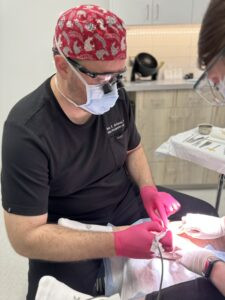
Electrodesiccation and curettage, often called ED&C, is another established treatment used for certain skin cancers. During the procedure, the dermatologist removes abnormal tissue and uses cautery to treat the area.
It can be appropriate for selected skin cancers in certain locations, particularly when the cancer is small and considered lower risk. It is generally not used in the same situations where precise margin control and tissue preservation are especially important.
How Do You Know Which Skin Cancer Treatment Is Right for You?
There is no single treatment that is best for every skin cancer. The type of cancer, its depth, location, size and aggressiveness all matter when deciding how it should be treated.
Some skin cancers can be treated effectively with topical medications or procedures such as ED&C. Others may be better treated with radiation or surgery. For many higher-risk basal cell and squamous cell carcinomas, Mohs surgery offers the advantage of examining the complete surgical margin while preserving as much healthy tissue as possible.
Your dermatologist can help explain which options are appropriate for your specific diagnosis and why one treatment may be recommended over another.
Considering radiation specifically? Learn more about Mohs surgery vs. image-guided radiation therapy for skin cancer.